


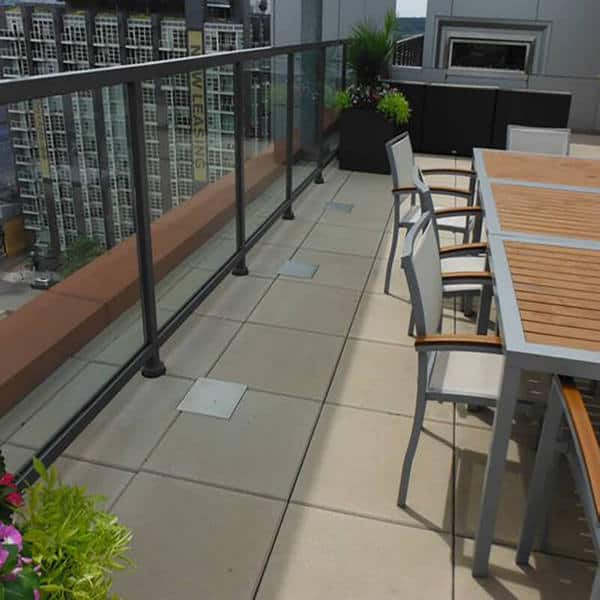
As architects continue to imagine and design complex projects, it is becoming increasingly common for fall arrest and tie-back equipment to be located on building terraces.
As the condominium market remains as competitive as ever, builders and developers are introducing special features and incentives to lure buyers. Items such as barbecues, bars, built-in kitchens, gardens, lounges, hot tubs, patio furniture, and even pools are often included on the terraces of buildings. While these are great selling features for buyers, they create complications when designing window-washing and fall-protection systems.
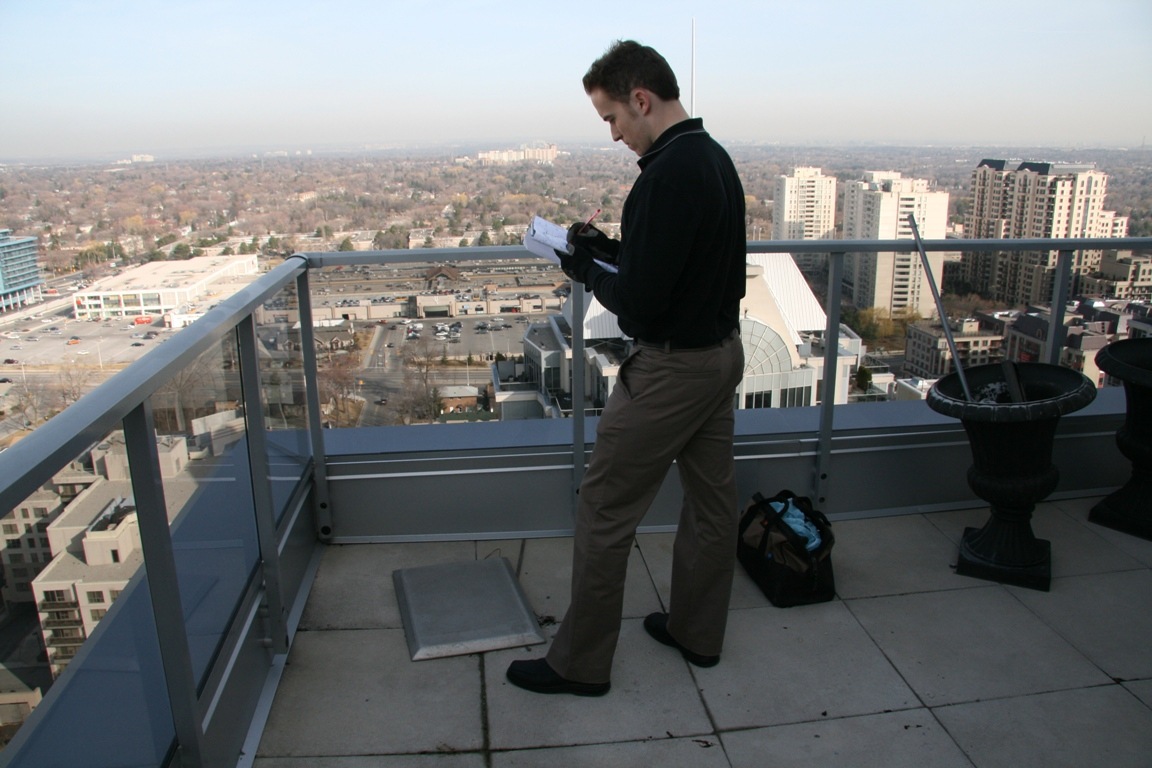
These condominiums are so lucrative that every detail is considered. Therefore, as much of the building’s equipment as possible is hidden in common areas and private terraces (so as not to disrupt the aesthetics). This usually means that, on terraces, our equipment is recessed beneath removable paver stones. This regularly causes two major problems:
1) The paver stones over the recessed equipment are not actually removable
2) Items are placed over the recessed equipment
If it is planned accordingly, there is a simple solution for problem “1”: covers and inserts can be manufactured and installed in paver stones, allowing them to be (rather easily) removed whenever recessed equipment (underneath them) requires access.
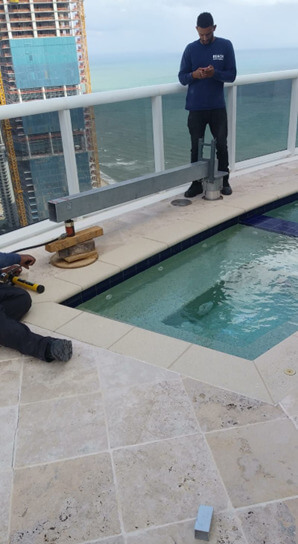
If the design of the window-washing and fall-protection system is provided to the architect, the architect can review it to ensure there are no disruptions.
What should the architect review?
1) They should ensure that no items (the special feature and incentives mentioned above or any others) are placed over the recessed equipment.
2) They should confirm that items that are in line with the point of suspension (perpendicular from the parapet to the equipment) will not interfere with the rigging lines.
This is where problem “2” can become complicated. The architect and equipment manufacturer have communicated and reviewed all of the areas, but then a tenant installs a deck and a built-in kitchen on their terrace (usually without contacting the condominium corporation). This makes accessing the recessed equipment nearly impossible, potentially preventing windows from being washed or a section of the building façade from being maintained.
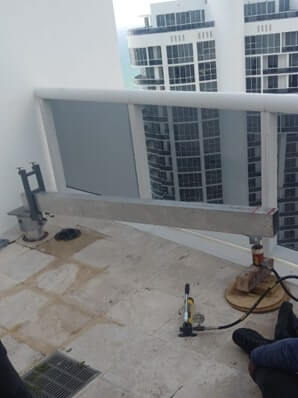
While a worker can usually move items like small barbecues or potted plants, large barbecues or large planter boxes cannot be moved. A worker may not even want to move anything in some cases because they are concerned about damaging the property.
It must be stressed to tenants the importance of communicating any additions or modifications to their terrace. The tenant should notify the condominium corporation, which should then contact the manufacturer of the window-washing and fall-protection system. Also, the condominium corporation should notify tenants when the equipment is going to be inspected or used so that the tenant can remove any items that are over the recessed equipment.