


I recently became aware of some very serious misconceptions within our industry, and I thought that this would be a great platform to clear them up.
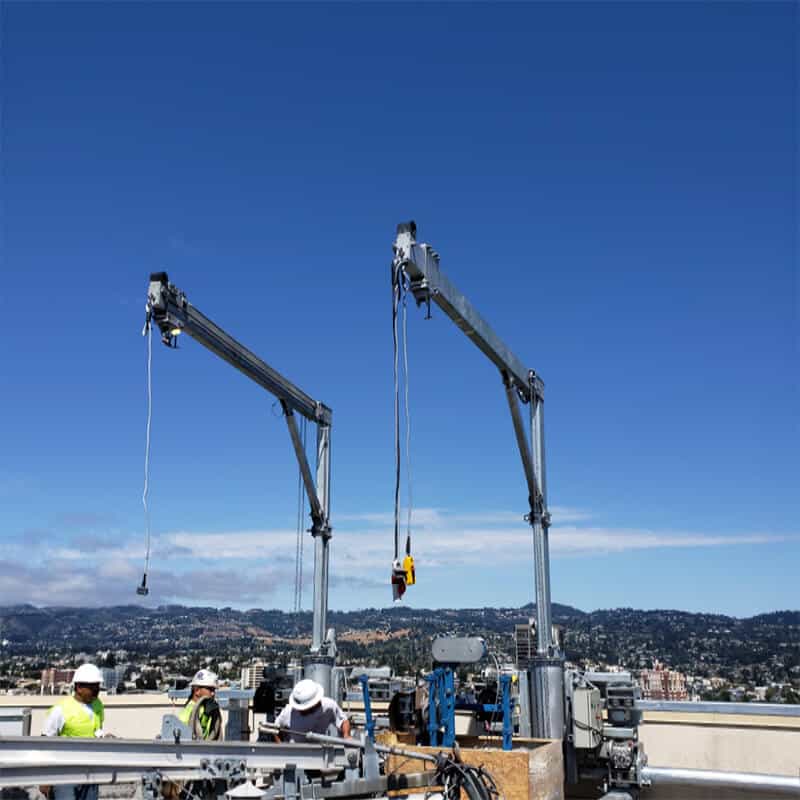
One of the most frequent misconceptions that I hear is that “we need davits” for a building or project to complete window washing and suspended maintenance. In certain situations, this is definitely the case; however, it is not the typical starting point for any design.
I think the misconception is that anchors and davits are the same type of equipment and function the same way.
Anchors and davits are not the same thing.
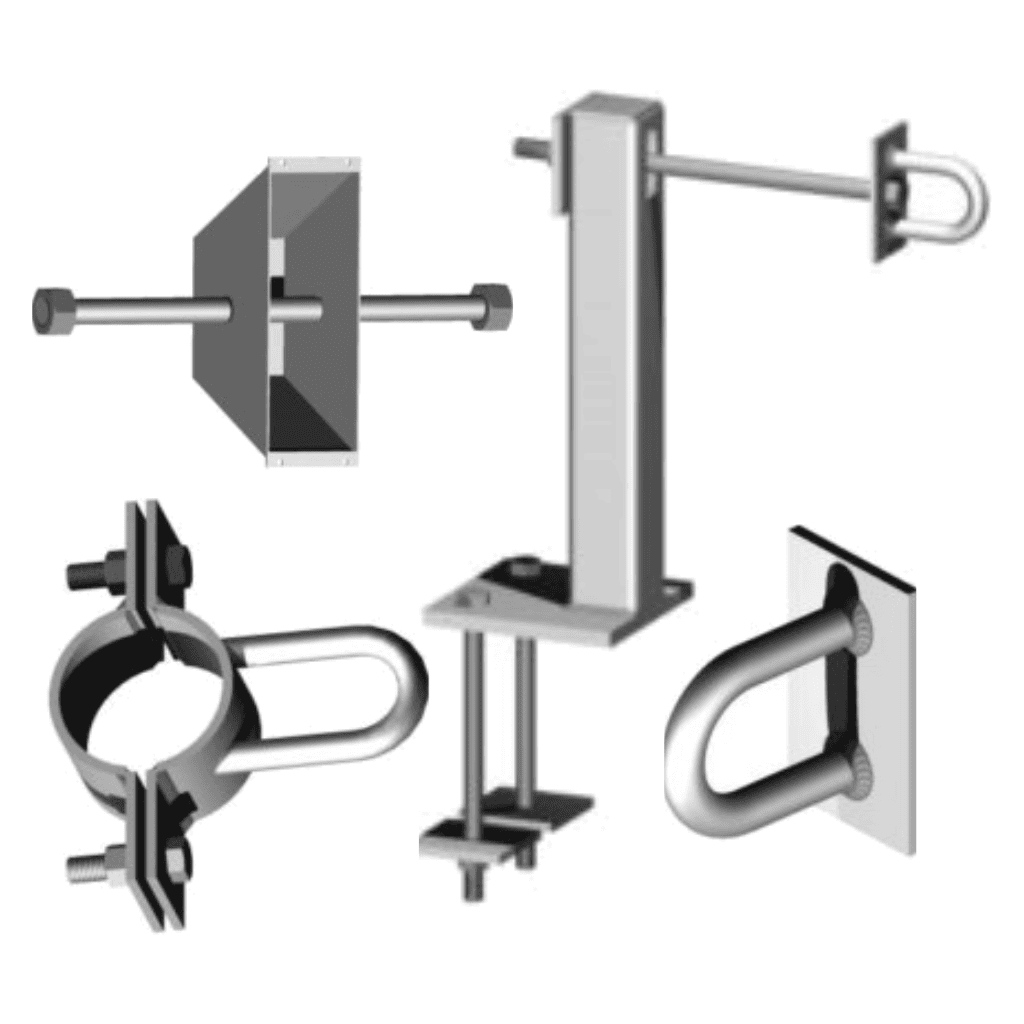
Anchors are fundamentally U-bar tie-offs that can take many shapes and are quite versatile.
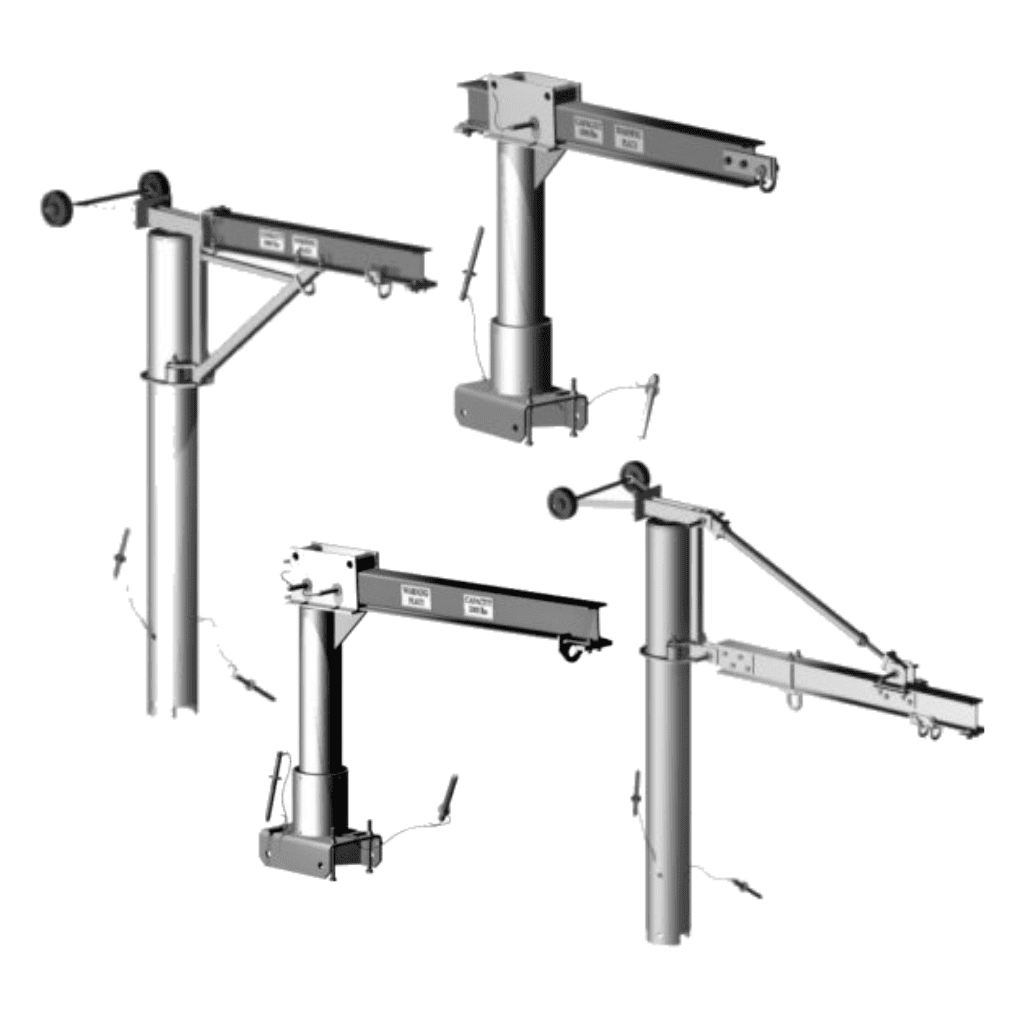
Davits consist of multiple elongated pieces that primarily allow for rigging over unique structures.
- Anchors usually come in two different styles: roof or wall.
- Davits consist of three components: base, boom, and mast.
- A roof anchor is a stainless steel U-bar welded to a cylinder-shaped steel pier (usually 15” or 18” tall). A picture of a roof anchor is shown below.
- A wall anchor is a stainless steel U-bar welded to a steel base plate (varying in size but usually a few inches). A picture of a wall anchor is shown below.
- The davit arm consists of an aluminum mast (varying in size but typically 5–6’ tall) and an aluminum boom (also varying in size but typically 8’ or more).
- Davits are quite large assemblies.
- These components are pinned and secured together to form the davit arm.
- Anchors can be secured to a structure in many ways, including bolting, casting or embedding in concrete, epoxy adhesive, welding, or wrapping around the structure.
- The davit arm is pinned and secured to a davit base.
- A davit base is a galvanized component used to secure the davit arm assembly during use.
- Davit bases can be secured to the structure in the same ways as anchors.
- Anchors can be used in nearly any rigging situation, including fall protection, suspended maintenance, window washing, direct rigging, and indirect rigging.
- Davits are far less flexible than anchors and are typically used only in specific applications, such as over tall parapets or non-structural elements.
Davits are not the typical starting point for any design. Pro-Bel will always seek to include the simplest, most cost-effective system possible, typically an anchor-based solution, and build upon it as required by the building or project conditions.