

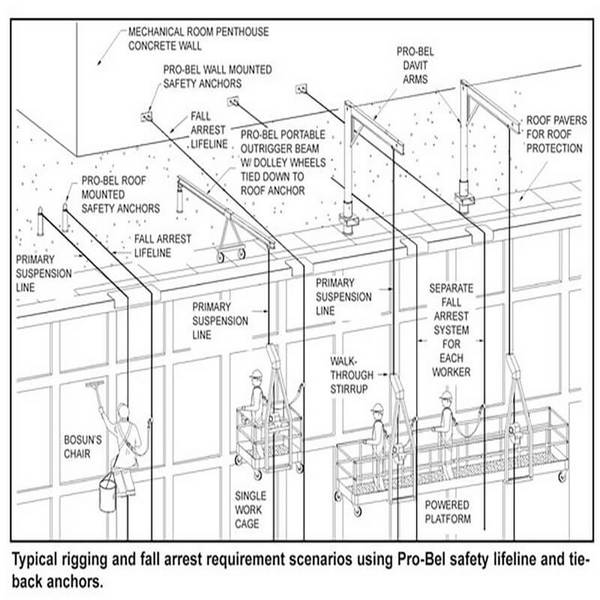
Fall arrest and tie-back anchors are primarily designed to protect workers from falls while working on or over the roof edge.
While a clear understanding of codes, regulations, and standards is of the utmost importance, the first consideration (after safety, of course) is function when designing proper window-washing, suspended maintenance, and fall-protection systems. Often, buildings install a system only to meet the requirements for building codes, Federal standards, and safety regulations. It is, however, essential to consider the function to be achieved to ensure the long-term success of any system.

What is Function?
First, you must consider the type of work being performed while the system is in use.
- Window washing
- Exterior building maintenance (caulking, restoration, replacement, etc.)
- Fixing/servicing/replacing equipment (cooling tower, drains, mechanical units) on the roof
Secondly, you must consider whether the workers will think the system is convenient and easy to use. This, beyond anything else, is the first thing that will jeopardize a worker’s safety. Like all professions, really, a worker will bypass or modify elements of the system if they believe it is inefficient and slowing them down.

Technical Audits
It is fortunate to note that building technical audits (for warranty programs) are increasingly focused on inadequately designed and impractical systems. The audits are bringing this to the building’s attention to say that the inconvenient system is just as dangerous as a poorly engineered one because no worker will use it.
The Design Process
If you want to ensure that a system is compliant and efficient, manufacturers like Pro-Bel will work closely with architects, construction managers, engineers, and general contractors to provide design services which encourage and initiate discussions regarding the design (at an early stage of the design process).
This process seeks to:
- Collect and analyze safe access and egress methods
- Determine unique building needs
- Establish a functional and common relationship in equipment locations
- Establish maintenance goals
- State conventional rigging problems and methods
- Uncover test methods and inspection practices

Budget
This process also looks to balance budget, compliance, and function. It must be stressed that caution is needed when the budget is the main consideration for any design (as functionality is the first to go).
The design process discussions have a significant impact on the system (and the building) design, as they include various perspectives. It is almost a way of conducting thorough due diligence and quality assurance.