


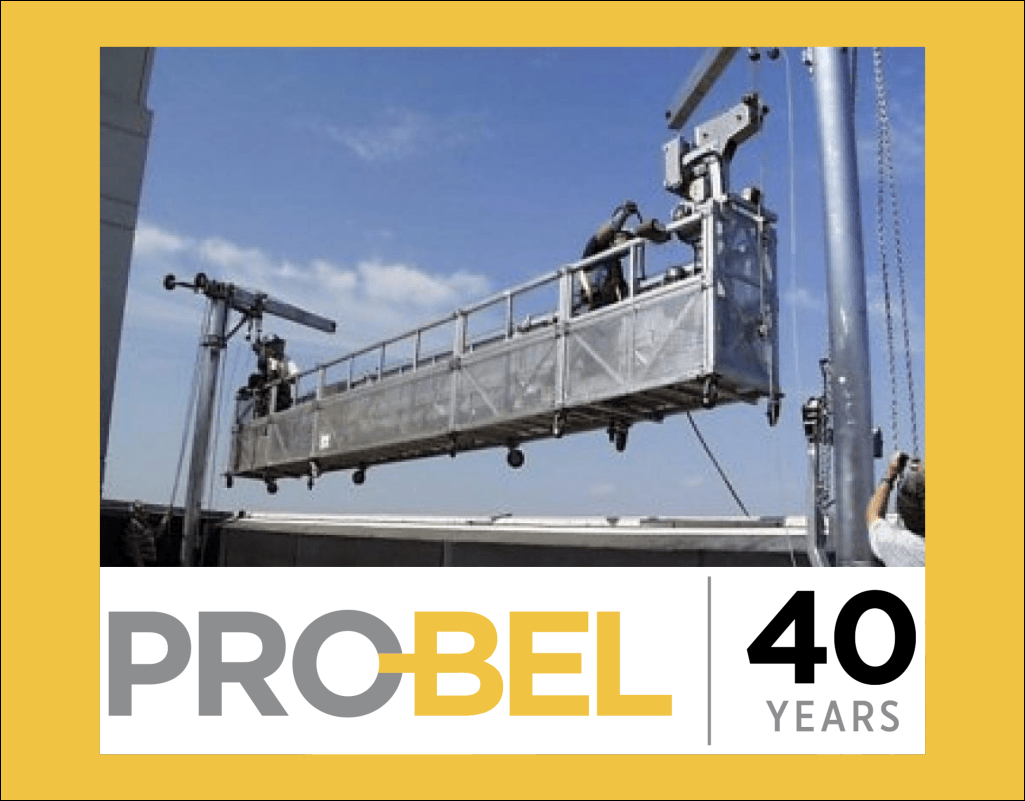
Everyone is responsible for preventing falls when working on a roof. The building owner/property manager, the self-employed contractor, any subcontractor and the worker are each responsible for safety considerations.
Health and safety on the roof starts when the decision is made to access the roof or when work begins near the roof edge. All aspects of working safely at a height should be considered. The general rule is: A fall protection system is required when there is a fall hazard of more than 10 feet and where the roof parapet edge is less than 42 inches tall. (plus or minus 3 inches)
” Preventing falls from heights is a priority for federal OSHA. Building owners are responsible to actively manage any significant hazard and provide assurances to the employers / contractors working at a height . .”
Doing nothing to address safety is not an option. To stay safe when working at height, ensure effective controls are in place to prevent harm. To select the most effective controls, you must consider the following steps:
Eliminate the chances of a fall by doing as much of the preparation work as possible before work begins. Normally, this is done by doing a fall hazard roof assessment. The assessment report will review all aspects of safe access and egress for all work activities that may take place on the roof. The intent is to isolate the worker from the risk of a fall by using roof-edge protection guardrails as a preventive measure. In some situations, a combination of controls will be required to ensure safe work.
“falls from heights starts with a professional fall assessment of your roof top.”
Edge protection should be used to isolate workers from falls. This includes guardrails, horizontal lifelines, localized tiebacks, and lifeline anchors.
Edge protection should be provided on all exposed edges of a roof, including the perimeter of buildings, skylights, and other fragile roof materials, and for any openings in the roof. This also applies to openings and edges of floor areas. Where there is a risk of workers falling through roof openings, the openings should be identified and guarded.
- A full hazard assessment of the roof is needed before work starts. Developing a checklist and work plan is good practice.
- Are workers trained or supervised to work on a roof, near the roof edge or over the edge using suspended equipment safely? Is there safe access to all roof areas, including a review of access ladders and catwalks?
- Have the roof and fall arrest system been inspected, reviewed, and tested if needed, and has the building owner/property manager provided assurance that the system is suitable for the intended work to safely access the building edge or facade?
- Have all access restrictions been identified and understood by the contractors to protect them from falling off the roof edges, and do they have a rescue plan?
- Are workers protected from falling through skylights, vulnerable penetrations or other brittle roof conditions, and are people below the work protected from the dangers of falling materials?
- Are the weather conditions suitable for working on a roof, and do roof workers have appropriate footwear to prevent slips?
- Have lower electrical hazards and vehicle traffic hazards been identified?
Other possible considerations may include eliminating the hazard of a fall from a roof and working from the ground using extension poles, scaffolding, and a mobile elevating work platform.
It’s the law – doing nothing is not an option!
Compliance with the legal requirements of the Occupational Health and Safety Act is the responsibility of anyone involved in working at heights in a place of work. The law recognizes that the building owner/property manager has the necessary means to control, eliminate, isolate and minimize fall hazards.
See the federal OSHA new fall protection mandate that affects existing buildings with anchors.