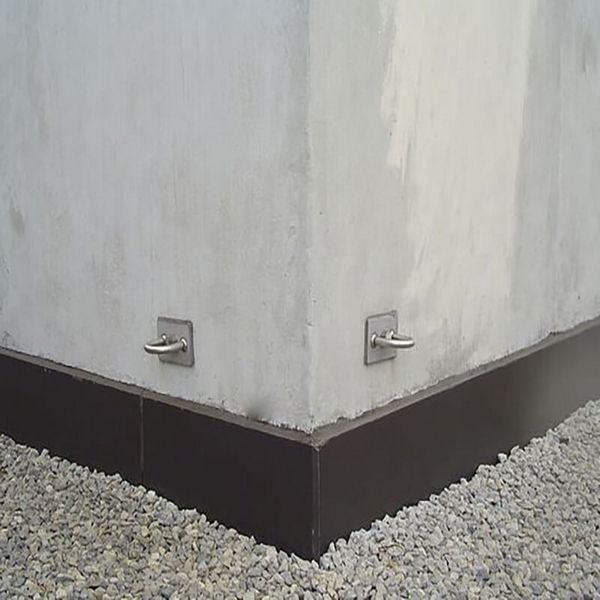
Whether it is new construction or retrofit, there is always a way to install window-washing, suspended maintenance, and fall-protection equipment. While equipment can be installed on structural steel or even wood structures, the easiest structure to work with is reinforced concrete. It is the most cost-effective, typically does not require access to the underside or localized reinforcing, and offers a number of other benefits, such as improved insulation and sound barrier qualities.
The best part of the new construction phase is that we do not have to send anyone to the site for installation (which obviously saves everyone money, time, and other resources). We simply send the equipment (usually a “roof anchor”) to the site (with our shop drawings), and the roof anchors are cast into the concrete. There are three types of “cast-in” anchors:
- single stud,
- four stud, and
- fully embedded.
Single Stud Roof Anchor
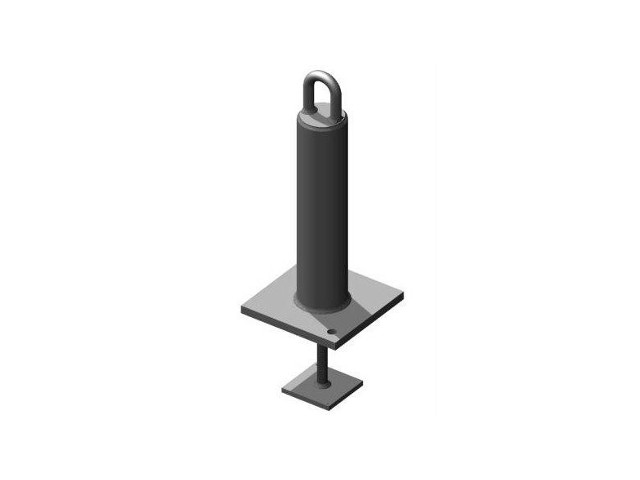
A single stud roof anchor is the most physically difficult to place (for casting in) as there is only one bolt to balance the anchor.
Four Stud Roof Anchor
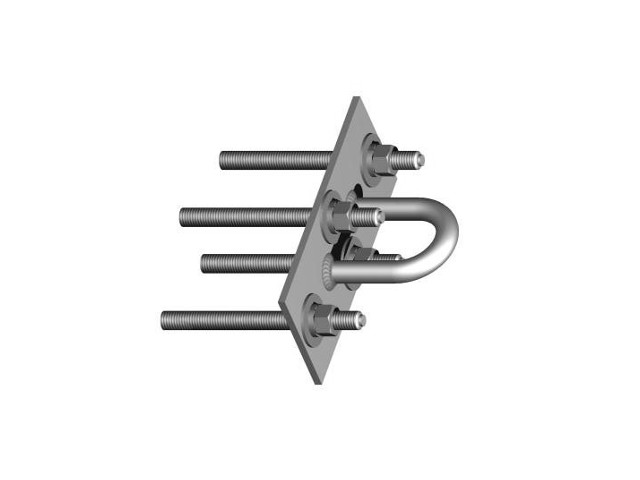
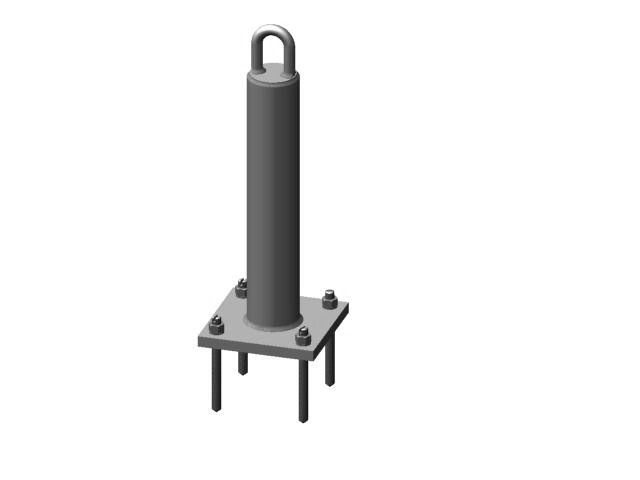
A four-stud roof anchor is much easier to place when casting in. As you can imagine, there are more studs (or bolts) on which to stand the anchor. These extra studs are required by engineering (specifically for taller anchors).
Fully Embedded Roof Anchor
A fully embedded roof anchor is actually the easiest to cast in because of its flat bottom. Also, it is the most cost-effective because it is all pier (instead of having stud(s) on the bottom).

What If Pours Are Missed?
In the unfortunate event that the roof anchor manufacturer misses a pour and anchors need to be retrofitted, it is not the end of the world!
Adhesive Roof Anchor
An adhesive roof anchor is glued into place with epoxy. This type of anchor does require load testing once every five years, though (which is an extra service).
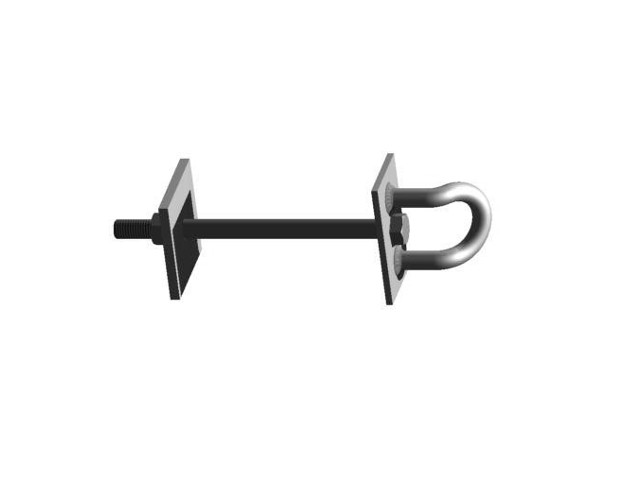
Bolt Through Roof Anchor
A bolt through roof anchor is another solution for a roof anchor that has to be retrofitted. This type of anchor does require access to the underside of the concrete, though, and it leaves components (base plate, bolt, nut) exposed.